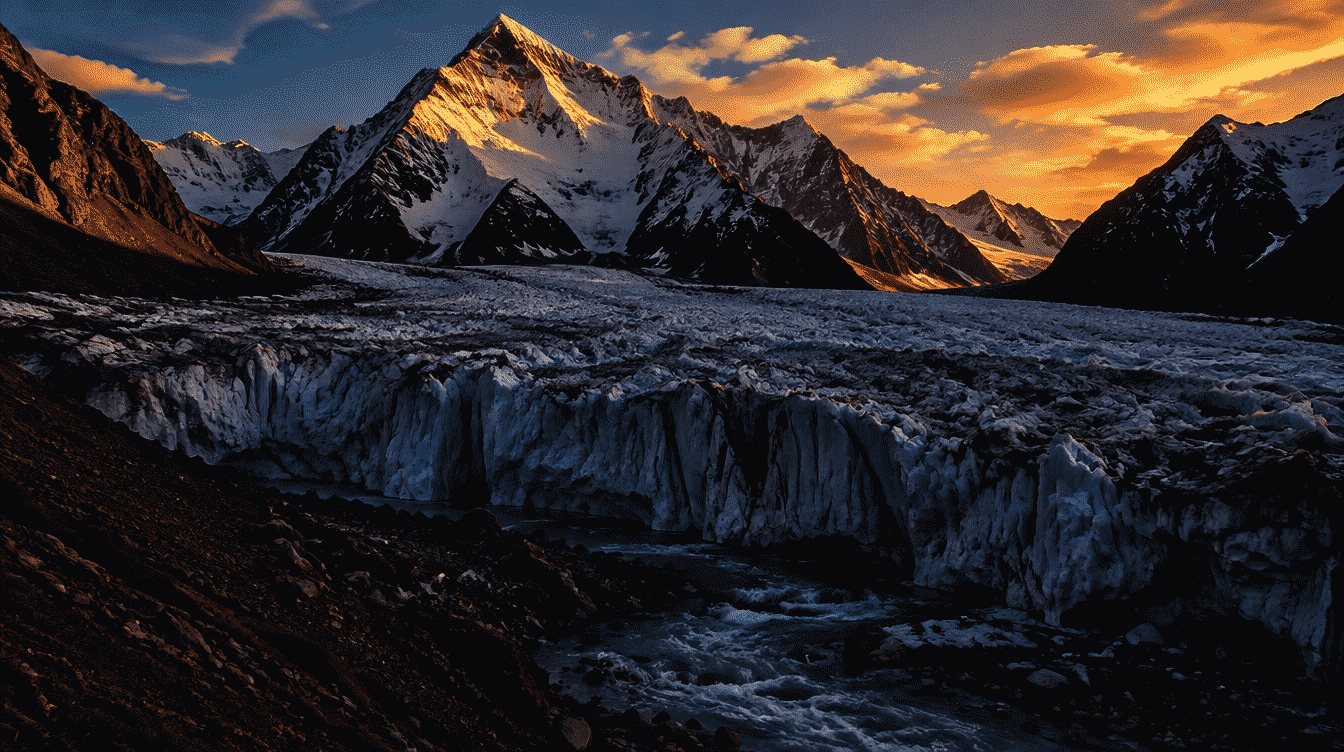
Pakistan sits in an unusual position in the global climate conversation: it contributes a small fraction of global greenhouse gas emissions, yet consistently ranks among the countries most vulnerable to climate change's effects. The reason comes down to geography - the country's water security is tied directly to ice sitting thousands of feet above sea level in the north, while its population centers in the south face increasingly extreme heat.
Why Glaciers Matter More Here Than Almost Anywhere Else
The Karakoram, Himalaya, and Hindu Kush ranges running through Gilgit-Baltistan and northern Pakistan hold one of the largest concentrations of glacial ice outside the Arctic and Antarctic - often called the "Third Pole." These glaciers feed the Indus River system, which in turn supplies the water that irrigates the vast majority of Pakistan's agricultural land and supports its major cities downstream.
This creates a direct link between glacier health in the far north and food and water security across the entire country - a change happening in a remote mountain valley has consequences hundreds of kilometers away.
The Karakoram Anomaly. Interestingly, glaciers in the Karakoram range specifically have shown periods of stability or even slight growth in past decades, in contrast to the retreat seen across most of the Himalaya - a pattern researchers call the "Karakoram Anomaly," linked to specific regional atmospheric and precipitation patterns. This is a genuinely studied nuance, not a sign that glacier melt isn't a serious concern regionally - broader Himalayan and Hindu Kush glaciers outside this specific anomaly have shown clearer retreat trends, and even a stable glacier can still produce dangerous glacial lake outburst floods (GLOFs) as meltwater accumulates behind unstable natural ice or debris dams.
The Flood-and-Drought Whiplash
Climate change doesn't just mean "less water" - it often means less predictable water. Warmer temperatures can accelerate melt in ways that increase flood risk in the short term (as seen in the catastrophic 2022 floods, driven by a combination of unusual monsoon intensity and glacial melt contribution), while longer-term glacier retreat threatens reduced and less reliable river flow in future decades. Communities in the north face both increased GLOF risk and, further downstream, both flood and eventual water-scarcity concerns tied to the same underlying cause.
Heat in the South, a Different Kind of Pressure
While the north deals with ice, southern and central Pakistan increasingly deals with extreme heatwaves - Jacobabad and parts of Sindh have recorded among the highest temperatures anywhere on earth in recent summers. This affects outdoor labor, crop yields, and public health simultaneously, particularly for outdoor workers and low-income urban populations without reliable access to cooling.
What Policy Response Looks Like
Pakistan's National Climate Change Policy and its Nationally Determined Contributions (NDCs) under the Paris Agreement outline adaptation priorities - water management, early-warning systems for GLOFs and floods, and reforestation efforts like the Ten Billion Tree Tsunami program. The National Disaster Management Authority (NDMA) plays a direct operational role in flood and glacial-flood early warning and response coordination.
Genuinely reducing vulnerability requires action at multiple levels simultaneously: national policy and international climate finance (Pakistan has been a vocal advocate at COP negotiations for loss-and-damage funding, given its outsized exposure relative to its emissions contribution), provincial-level water and disaster management infrastructure, and community-level adaptation in the most exposed mountain and coastal communities.
What This Means at an Individual Level
Most people can't personally change glacier retreat rates, but awareness and preparedness genuinely matter at the household and community level - understanding local flood risk if you live near a glacier-fed river system, supporting water conservation practices given increasing supply unpredictability, and staying informed through NDMA's public advisories during monsoon and heatwave seasons.
Conclusion
Pakistan's climate exposure is a geography problem as much as an emissions problem - a water system that depends on distant mountain ice, paired with some of the most extreme heat exposure anywhere on the planet. Meaningful adaptation requires action from national policy down to individual household awareness, and staying informed through credible sources is a genuinely useful first step, not just a passive news habit.
Frequently Asked Questions
Is it true that some glaciers in Pakistan are not shrinking?
Yes, this is a real, studied phenomenon called the Karakoram Anomaly, where certain glaciers in the Karakoram range have shown stability or slight growth due to specific regional weather patterns - but this doesn't apply uniformly across all of Pakistan's glaciated regions, and even a stable glacier can still pose flood risk from meltwater lake formation.
What is a GLOF and why is it dangerous?
A Glacial Lake Outburst Flood happens when a lake formed by glacial meltwater, often held back by unstable ice or debris, breaches suddenly and releases a large volume of water downstream with little warning - these are a specific, serious risk in Gilgit-Baltistan and northern Pakistan's mountain valleys.
How does climate change connect to the 2022 Pakistan floods?
The 2022 floods resulted from an unusually intense monsoon season combined with elevated glacial melt contribution, both consistent with the kind of extreme and less predictable weather patterns associated with a changing climate, though attributing any single event entirely to climate change involves complex scientific analysis beyond a simple yes/no answer.
What is Pakistan doing about climate adaptation?
Key efforts include the National Climate Change Policy, NDC commitments under the Paris Agreement, NDMA-coordinated early-warning systems for floods and GLOFs, and large-scale reforestation programs - alongside continued advocacy at international climate forums given Pakistan's disproportionate vulnerability relative to its emissions output.
Where can I get reliable flood or heatwave warnings?
The National Disaster Management Authority (NDMA) and Pakistan Meteorological Department are the primary official sources for advisories during monsoon, flood, and heatwave seasons, and are worth following directly rather than relying solely on secondhand social media reports during an active event.