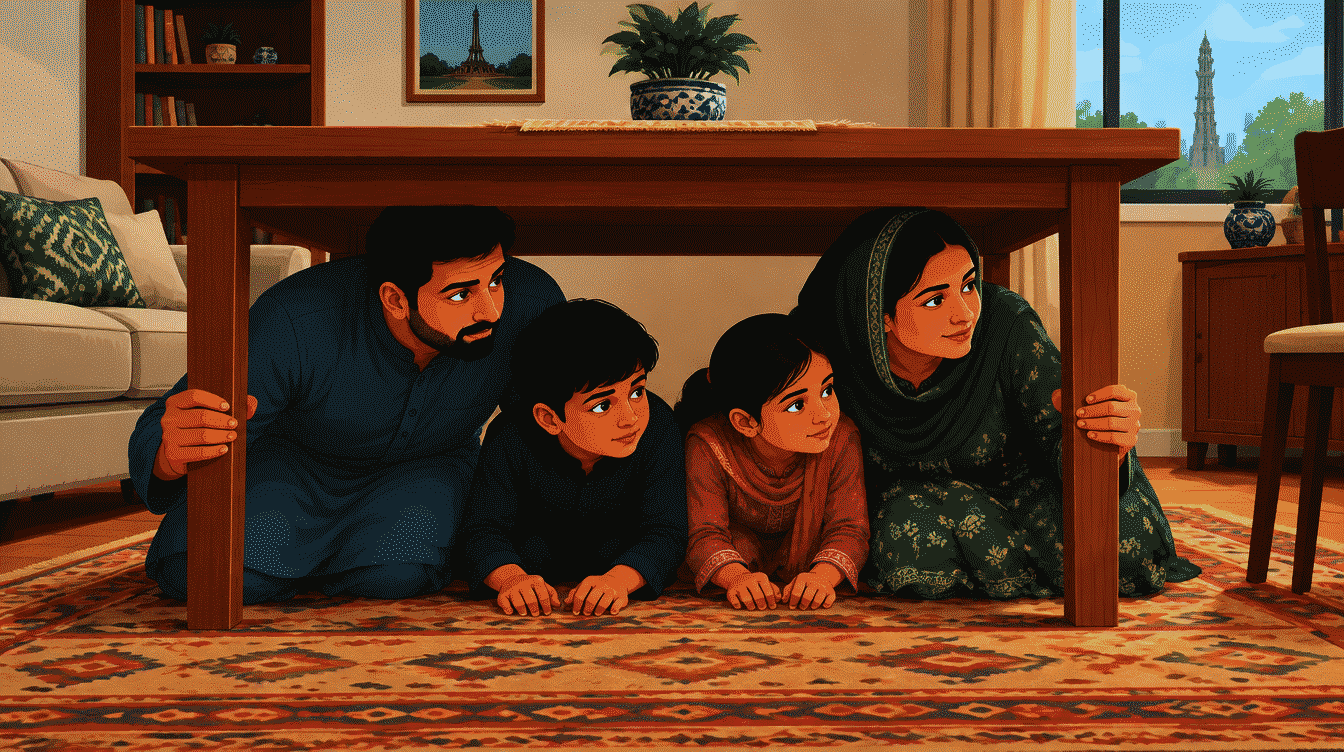
Pakistan sits at the collision zone of the Indian and Eurasian tectonic plates, which makes parts of the country - particularly the north and northwest - among the more seismically active regions in the world. The Hindu Kush region alone generates frequent moderate earthquakes, most too deep or minor to cause damage, but the same fault systems have also produced Pakistan's most devastating disasters, including the 2005 Kashmir earthquake that killed over 70,000 people and the 2013 Awaran earthquake in Balochistan.
Frequent minor activity in a region doesn't predict when a major one will happen - but it's exactly why baseline household preparedness matters here more than in most parts of the world, rather than something to think about only after a major event makes headlines.
What NDMA Actually Does
The National Disaster Management Authority coordinates Pakistan's disaster response and preparedness at the federal level, working with Provincial Disaster Management Authorities (PDMAs) on early warning coordination, response logistics after a major event, and public awareness guidance. NDMA doesn't predict earthquakes - no agency anywhere can currently do that reliably - but it does play the central coordinating role once one happens, and publishes preparedness guidance beforehand.
Before: What Real Household Preparedness Looks Like
Identify safe spots in every room you spend time in. Under a sturdy table or desk, or against an interior wall away from windows, mirrors, and anything that could fall - not doorways, despite the old advice, which modern structural guidance no longer considers meaningfully safer than a sturdy piece of furniture in most modern buildings.
Secure heavy furniture and fixtures. Bookshelves, water heaters, and heavy wall-mounted items (mirrors, large frames) should be anchored where possible - a significant share of earthquake injuries come from falling objects, not structural collapse.
Keep a basic emergency kit accessible. Water, non-perishable food, a flashlight, a first-aid kit, copies of important documents, and any regular medication - stored somewhere reachable even if part of the home is inaccessible afterward.
Know your building. If you live in an older structure, particularly unreinforced masonry common in parts of Pakistan, understanding its relative vulnerability (even informally) is more useful than assuming all buildings respond the same way in a quake.
During: Drop, Cover, Hold On
This remains the internationally recommended response, and NDMA's own public guidance aligns with it:
- Drop to your hands and knees before the shaking knocks you down.
- Cover your head and neck, ideally under a sturdy table - if none is available, cover your head and neck with your arms against an interior wall.
- Hold On to whatever you're sheltering under, so you stay covered if the shaking shifts it.
If you're outdoors, move to an open area away from buildings, trees, and power lines. If you're driving, pull over away from overpasses and bridges and stay in the vehicle until shaking stops.
After: The Often-Overlooked Part
Expect aftershocks. They can happen minutes to days later and are sometimes strong enough to cause additional damage to already-weakened structures - don't assume it's over after the first shake stops.
Check for hazards before re-entering a building. Gas leaks, structural cracks, and damaged electrical lines are common secondary risks - if you smell gas or see obvious structural damage, don't re-enter until it's been checked.
Follow official channels, not rumors. In the hours after a significant earthquake, misinformation about aftershock predictions or unofficial casualty figures spreads quickly on social media - NDMA and PDMA official channels are the reliable source for verified information and safety instructions.
Conclusion
Earthquake risk in Pakistan isn't hypothetical - it's a function of real, active geology, most visible in the Hindu Kush region's frequent activity and the historical record of major events in the Kashmir and Balochistan fault systems. Basic household preparedness - identifying safe spots, securing heavy items, keeping a real emergency kit, and knowing the Drop-Cover-Hold-On response - takes relatively little effort and is the single most actionable thing an individual household can do ahead of an event nobody can predict the timing of.
Frequently Asked Questions
Why does the Hindu Kush region have so many earthquakes?
It sits at a complex, active zone where the Indian tectonic plate continues to push against the Eurasian plate, producing frequent seismic activity - most events are moderate and occur at depths that limit surface damage, but the same broader fault system is capable of larger, damaging earthquakes.
Is "stand in a doorway" still correct earthquake advice?
No - this was based on older adobe-style home construction where the doorframe was structurally reinforced relative to the rest of the structure. In most modern buildings, a doorframe isn't meaningfully stronger, and you're safer using Drop, Cover, and Hold On under sturdy furniture.
Can earthquakes be predicted in advance?
No scientific method currently exists to reliably predict the exact timing, location, and magnitude of an earthquake before it happens - preparedness planning assumes an earthquake could happen at any time rather than trying to anticipate one specifically.
What should be in a basic earthquake emergency kit?
Water, non-perishable food, a flashlight with extra batteries, a first-aid kit, copies of ID and important documents, any essential medication, and a whistle to signal for help if trapped - kept somewhere accessible even if part of your home becomes unreachable.
Where can I get official earthquake and disaster alerts in Pakistan?
NDMA and your provincial PDMA are the official coordinating bodies for disaster alerts and response guidance, alongside the Pakistan Meteorological Department, which also monitors seismic activity - these are the sources worth following directly during and after an event.