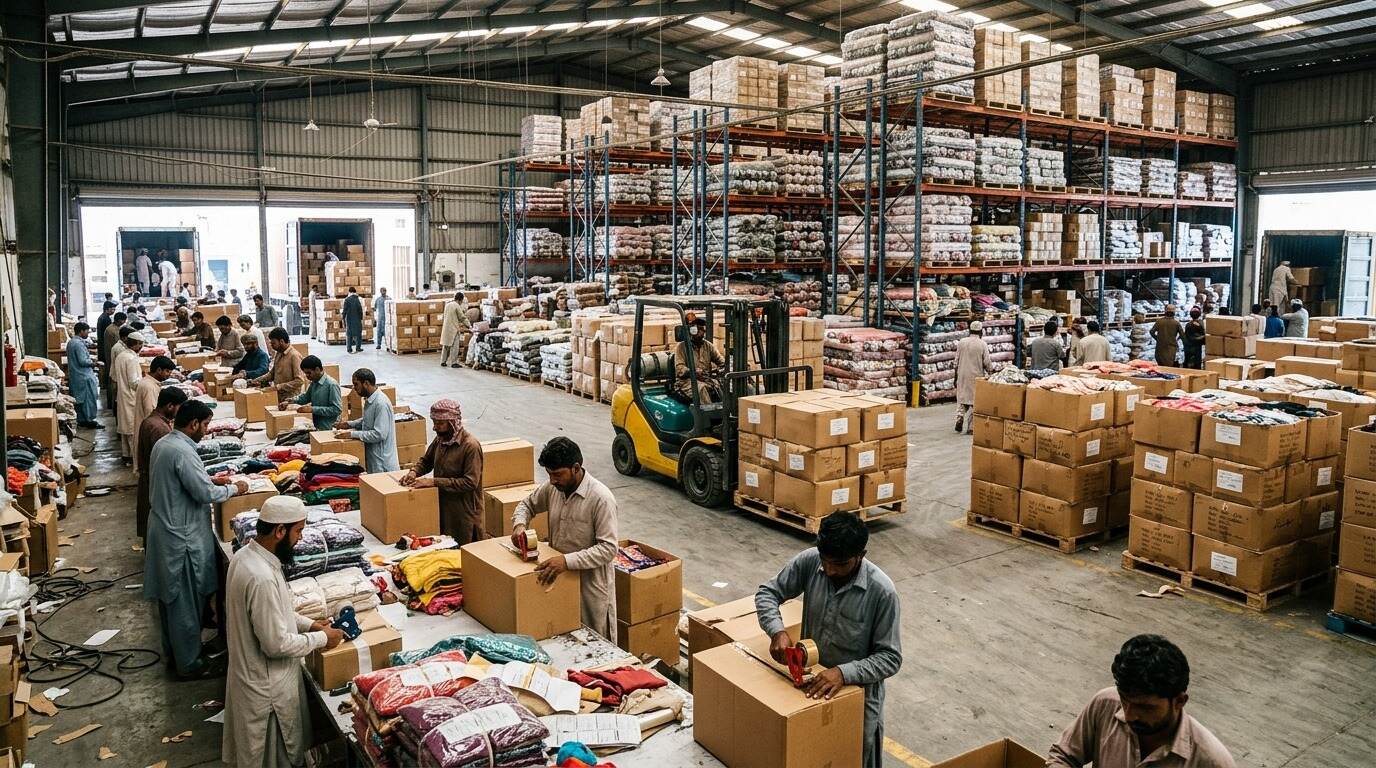
Export performance is one of the clearest indicators of how an economy is actually functioning, beyond headlines about GDP growth or currency movements. For Pakistan specifically, the export mix says a lot about where genuine competitive advantage exists, where policy support is working, and where the country remains dependent on a narrow set of industries that carry outsized risk when global demand shifts.
A note on approach before going further: this article does not cite specific export figures, growth percentages, or dollar values for 2026, because doing so without a verified, current source would mean presenting invented numbers as fact. Instead, this piece is structured around the sectors that are consistently discussed as Pakistan's export growth areas, the structural factors that actually drive export performance, and where a reader should go to get accurate, current figures before making any business or investment decision based on them.
Why Pakistan's Export Mix Matters
Pakistan's exports have historically been concentrated in a small number of categories, with textiles and apparel representing the largest single share for decades. This concentration has consequences: when global demand for textiles softens, or cotton prices swing, or a major buyer country adjusts its trade policy, the effect on Pakistan's export earnings is disproportionate compared to an economy with a more diversified export base.
This is why diversification - genuinely growing non-textile sectors rather than just discussing them - has been a recurring theme in Pakistani economic policy conversations for years. Whether 2026 represents meaningful progress on that front, or a continuation of long-standing patterns, is a question that depends on current data rather than general trend lines. [VERIFY: latest State Bank of Pakistan export composition data, broken down by sector, for the current fiscal year.]
Textiles: Still the Backbone, Still Under Pressure
Textiles and apparel remain the largest and most established export category for Pakistan, built on a domestic cotton and yarn supply chain that spans spinning, weaving, and finished garment manufacturing, concentrated heavily around Faisalabad, Karachi, and Lahore. The sector's competitiveness has traditionally depended on relatively low labor costs, established buyer relationships in the US and EU, and preferential trade access such as the EU's GSP+ scheme.
The sector also faces consistent structural pressure: rising energy costs for textile mills, competition from Bangladesh and Vietnam in the same buyer markets, and periodic disruptions from cotton crop performance domestically. Whether textile exports grew, held steady, or declined in the current year is a factual question that requires current trade data rather than assumption. [VERIFY: current fiscal year textile and apparel export figures and year-on-year change, from the State Bank of Pakistan or the Pakistan Bureau of Statistics.]
IT and Digital Services: The Fastest-Discussed Growth Area
Pakistan's IT and IT-enabled services exports, along with the broader freelance and remote-services economy, are consistently cited as the country's most promising growth story among trade analysts and policymakers, for a straightforward structural reason: this sector doesn't depend on physical manufacturing capacity, energy-intensive production, or shipping logistics, which are exactly the constraints that limit sectors like textiles.
This category includes software development and IT services exported by registered companies, as well as freelance income earned by individual Pakistani professionals on platforms serving international clients - a segment that's harder to measure precisely because a meaningful share of it moves through channels not fully captured in official trade statistics. The Pakistan Software Export Board (PSEB) and the State Bank of Pakistan both track formal IT export receipts, and their published figures are the appropriate source for understanding this sector's actual current scale. [VERIFY: latest PSEB and State Bank of Pakistan IT and IT-enabled services export figures for the current year.]
Agricultural Exports: Rice, Fruit, and Value-Addition
Pakistan's agricultural exports, led historically by rice (particularly basmati) along with mangoes, citrus, and other fruit, represent a sector with genuine natural advantage but persistent challenges around post-harvest handling, cold-chain logistics, and value-addition before export. A recurring theme in policy discussion is the gap between Pakistan's raw agricultural output and its ability to export higher-value processed or branded agricultural products rather than raw commodities.
Water availability and crop yield in a given year materially affect what agricultural exports actually look like, which makes this a sector where year-to-year figures genuinely matter rather than long-term averages. [VERIFY: current fiscal year agricultural export performance by product category, from the Pakistan Bureau of Statistics.]
Sialkot's Manufacturing Exports: Surgical Instruments and Sports Goods
Sialkot represents one of Pakistan's more distinctive export clusters - a concentrated manufacturing hub producing surgical instruments, sports goods (notably footballs, historically including for major international tournaments), and leather goods, largely through small and medium-sized manufacturers rather than a small number of large firms. This cluster has sustained export relevance for decades through specialized craftsmanship and established buyer relationships, particularly in European and North American markets.
Growth in this category tends to move with global manufacturing demand cycles and the sector's ability to meet increasingly strict international quality and compliance standards, particularly for medical device exports. [VERIFY: current export performance for Sialkot's surgical instruments and sports goods sectors specifically.]
Minerals and Resource Exports: A Longer-Term Story
Pakistan's mineral resources, including chromite, marble, gemstones such as kunzite and other varieties found in Gilgit-Baltistan, and copper and gold reserves such as those associated with the Reko Diq project, represent a sector frequently discussed for its long-term potential rather than its current export scale. Much of this potential depends on infrastructure investment, regulatory clarity, and large-scale project development timelines that extend well beyond a single year.
This is a sector where the gap between "discussed potential" and "current verified export volume" tends to be wide, which makes it particularly important not to treat projected future output as current export performance. [VERIFY: current mineral and mining export figures, and the actual production status of major projects such as Reko Diq, from official government or company sources.]
What Actually Drives Export Growth in Pakistan
Beyond sector-by-sector performance, a few structural factors consistently determine whether Pakistani exports grow in a given year, regardless of which industry is being discussed.
Currency and trade policy
The Pakistani rupee's exchange rate directly affects export competitiveness - a weaker rupee generally makes Pakistani exports cheaper for foreign buyers, though this benefit is often offset by higher import costs for the raw materials many export industries depend on. Trade policy decisions, including export rebates, tariff structures, and Free Trade Agreement terms, also shape which sectors have room to grow.
Energy costs and industrial competitiveness
Manufacturing-heavy export sectors, particularly textiles, are highly sensitive to electricity and gas tariffs, since energy represents a significant share of production cost in these industries. Energy policy and industrial tariff decisions are frequently cited by exporters as one of the most direct levers affecting their competitiveness against regional peers.
Market access and trade agreements
Preferential access to major markets, such as the EU's GSP+ status for Pakistan, materially affects export volumes in eligible categories, and changes to that status carry meaningful consequences for exporters who depend on it. Ongoing trade negotiations and bilateral agreements are worth tracking specifically for any sector a reader has a direct interest in.
How to Track This Yourself, With Verified Sources
Given how much of this picture depends on current, verifiable figures, the most useful thing a reader can do is go directly to primary sources rather than relying on secondhand summaries. The State Bank of Pakistan publishes regular external trade statistics, the Pakistan Bureau of Statistics releases sector-specific trade data, and the Ministry of Commerce publishes trade policy updates and strategic framework documents. For a broader, ongoing view of Pakistan's exports directory and export-related resources, VPD maintains an Exports directory as part of the platform.
Conclusion
Pakistan's export story in any given year is really several separate stories at once: a textile sector managing structural pressure while remaining the largest earner, an IT and freelance services sector widely seen as the most promising growth area, agricultural exports constrained by logistics and value-addition gaps, and manufacturing clusters like Sialkot sustaining a specialized niche. Which of these grew fastest, held steady, or declined in the current year is a factual question that deserves a factual, sourced answer rather than a general assumption.
Readers making a business, investment, or academic decision based on this topic should verify current figures directly through the State Bank of Pakistan, the Pakistan Bureau of Statistics, or the Ministry of Commerce before relying on any specific number.
Frequently Asked Questions
What is Pakistan's largest export category?
Textiles and apparel have historically represented Pakistan's largest export category by value, though the current-year composition should be verified against State Bank of Pakistan or Pakistan Bureau of Statistics data rather than assumed to be unchanged.
Is Pakistan's IT export sector actually growing?
IT and IT-enabled services, along with freelance digital services, are widely discussed as Pakistan's most promising export growth area due to their lower dependence on physical infrastructure and energy costs. Current growth figures should be verified through PSEB and State Bank of Pakistan data.
What role does the Pakistani rupee play in export performance?
A weaker rupee generally makes Pakistani exports more price-competitive internationally, though this is often offset by higher costs for imported raw materials many export sectors depend on.
Why does Sialkot matter for Pakistan's exports?
Sialkot is a concentrated manufacturing cluster known for surgical instruments and sports goods, sustained largely by small and medium-sized manufacturers with long-established international buyer relationships.
Are Pakistan's mineral exports significant right now?
Mineral resources represent long-term potential more than current export scale in most public discussion, and the actual current production and export status of major projects should be verified from official sources rather than assumed based on projected potential.
Where can I find accurate, current Pakistan export data?
The State Bank of Pakistan, the Pakistan Bureau of Statistics, and the Ministry of Commerce are the appropriate primary sources for current, verified export figures.