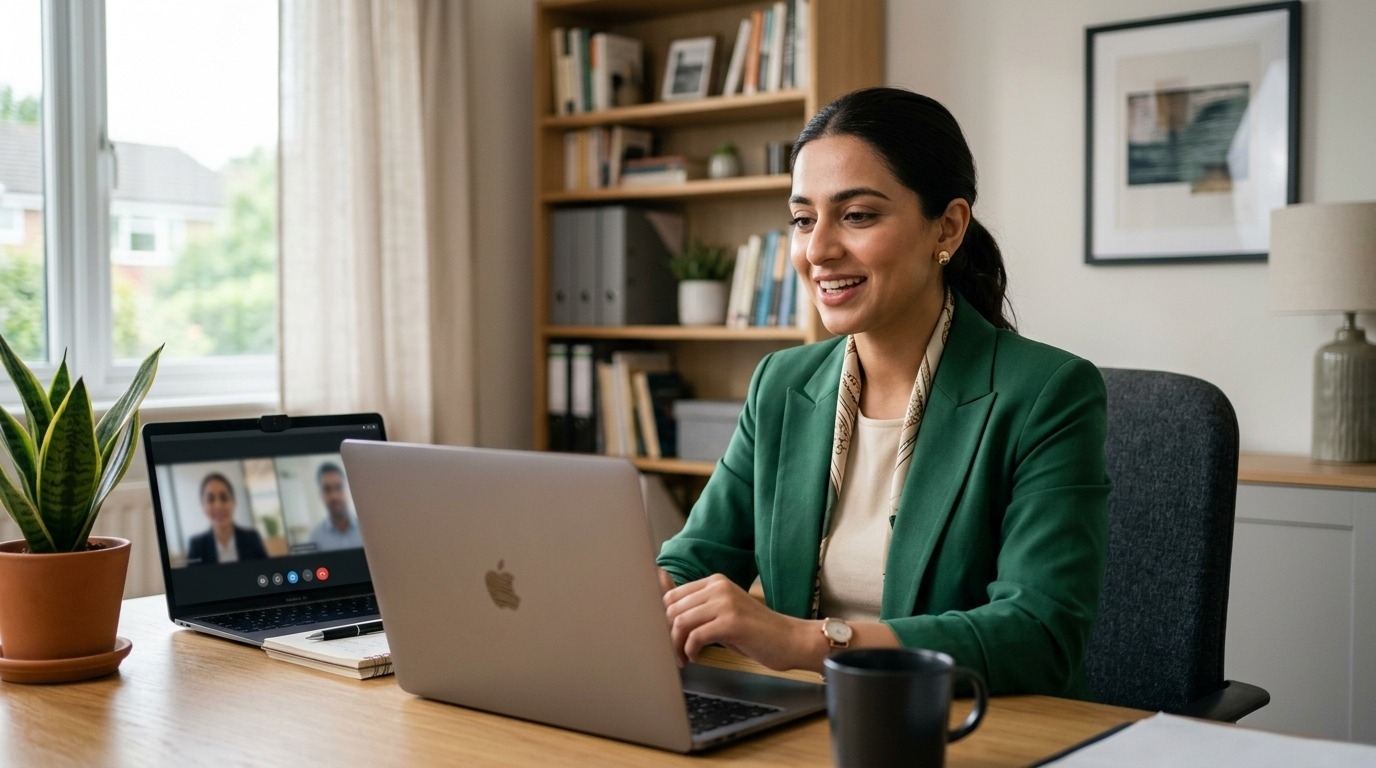
A candidate in Lahore lands an interview with a remote-first company based abroad - the kind of opportunity that would have been out of reach a few years ago, now sitting in the inbox as a calendar invite with a Zoom link. The excitement is real, and so is a specific kind of anxiety: an in-person interview has decades of familiar convention behind it, but a video interview with someone in a different city, sometimes a different country entirely, follows a slightly different set of rules that nobody explicitly teaches.
Remote hiring has opened real opportunities for Pakistani professionals to work with companies well beyond the local job market, and video interviews are now the default first step for a large share of these roles. But the format punishes a specific set of habits that don't matter much in person and rewards a different kind of preparation - and a number of genuinely qualified candidates lose otherwise strong opportunities to avoidable mistakes that have nothing to do with their actual skills.
This article covers what actually goes wrong most often, from the technical setup before the call even begins to the specific questions remote employers ask that in-person interviews rarely do.
The Technical Setup Mistakes That Happen Before the Interview Even Starts
Internet connection and backup plans
A call that freezes repeatedly or drops entirely creates a strong, if unfair, impression that a candidate might be unreliable to work with remotely - which is precisely the concern a remote employer is trying to screen for in the first place. Testing the connection beforehand, having a mobile hotspot ready as backup, and closing bandwidth-heavy applications during the call are simple precautions that matter more for a remote interview than almost anything else on this list.
Camera position, lighting, and background
A camera positioned too low, showing mostly ceiling or the underside of a chin, or a dim room where facial expressions are hard to read, creates a subtly worse impression than most candidates realize. Facing a window or a light source, propping a laptop at roughly eye level using a stack of books if needed, and choosing a plain or tidy background all take a few minutes to set up and noticeably change how a candidate comes across on screen.
Testing the platform in advance
Not every company uses the same video platform, and fumbling with an unfamiliar interface - unable to find the mute button, unsure how to share a screen if asked - burns time and composure in the first few minutes of an interview that's often only thirty minutes long to begin with. Opening the specific platform being used a day before, even just to check camera and microphone permissions, removes an entirely avoidable source of stress.
Time Zones: The Mistake That Signals Unreliability Fastest
Confirming an interview time without carefully converting time zones is one of the most common and most damaging mistakes candidates make with international remote roles. Arriving late, or worse, missing the interview entirely because of a miscalculated time difference, sends exactly the wrong signal to an employer who is specifically evaluating whether a candidate can manage a distributed, asynchronous work relationship reliably.
The safer habit is converting the interview time using the specific meeting invite's stated time zone, double-checking it against a reliable time zone converter, and setting a calendar reminder in local Pakistan time rather than trusting memory or mental math under pressure.
Communication Habits That Read Differently on Video Than In Person
A slight delay or lag on a video call makes normal conversational overlap - interrupting to show engagement, the small verbal cues people use in person - come across as talking over the other person rather than active listening. Pausing briefly before responding, and explicitly acknowledging a point before answering ("that's a good question, let me think through it") both compensate for this lag and read as more composed on screen than a rapid, in-person-style back and forth.
Similarly, gestures and body language that read as natural and warm in person can look distracting or overly animated within a small video frame. Calmer, more contained body language tends to translate better on camera, and it's worth watching a recording of a practice call, if possible, to see how one actually comes across rather than assuming.
Questions Pakistani Candidates Underprepare For
"Why do you want to work remotely?"
This question trips up more candidates than it should, often producing a generic answer about flexibility or avoiding a commute. A stronger answer connects remote work to genuine, specific working style - focus without office interruptions, experience already managing tasks independently, or a track record of meeting deadlines without close supervision - because that's closer to what the employer is actually trying to assess.
Questions about self-management and availability
Remote employers, especially those hiring across time zones, frequently probe how a candidate structures an unsupervised workday, handles overlapping hours with a distributed team, and communicates progress without someone physically checking in. A candidate who hasn't thought through concrete examples - a specific tool used to track tasks, a real instance of proactively updating a manager on delayed work - tends to answer these vaguely, which reads as inexperience with remote work even when the underlying skill is genuinely there.
What to Actually Do in the First Two Minutes
The first two minutes of a video interview do more work than candidates usually credit, mostly because a slightly awkward or unprepared opening color the impression that follows. Joining the call two to three minutes early rather than exactly on time avoids the mild chaos of a late entrance; a brief, natural bit of small talk (commenting on the interviewer's evident location, or simply asking how their day is going) before diving into formal questions tends to ease the tension that both sides usually feel at the start of any interview, remote or not.
Following Up Without Seeming Anxious
A short thank-you message sent within a day of the interview, referencing one specific point discussed rather than a generic thank-you template, is worth doing and rarely backfires. Following up multiple times before the stated decision timeline has passed, however, tends to create the opposite impression from the one a candidate is going for - patience during the wait is itself a small, quiet signal of the same reliability a remote employer is trying to evaluate throughout the whole process.
Conclusion
Remote job interviews reward a different set of habits than in-person ones - a stable connection, a well-lit and quiet setup, correct time zone math, and answers that speak directly to independent work and self-management. None of these require reworking a candidate's actual qualifications; they require closing the small, avoidable gaps that quietly undermine a strong candidate before the conversation about skills even really starts.
The practical next step is doing a full practice run through the exact platform an upcoming interview will use, at the exact time of day it's scheduled, to catch lighting, connection, or interface issues while there's still time to fix them. Pakistani job seekers currently searching for their next opportunity, remote or otherwise, can browse current openings on VPD's jobs section.
Frequently Asked Questions
What should I wear for a remote video interview?
The same standard of professional dress appropriate for an in-person interview in that industry, visible from the waist up at minimum - a video interview isn't a lower-stakes version of the same conversation, and dressing accordingly signals that a candidate is taking it seriously.
What if my internet connection is unreliable on interview day?
Have a backup plan ready in advance - a mobile hotspot, a nearby location with more reliable connectivity, or at minimum, a message prepared to send the interviewer immediately if a serious issue arises, rather than leaving them wondering what happened.
How early should I join a video interview?
Two to three minutes before the scheduled time is generally right - early enough to avoid a rushed, late entrance, not so early that it becomes awkward waiting in a virtual lobby.
Should I mention that I'm applying from Pakistan if the company is based abroad?
This usually doesn't need to be raised directly unless it's relevant to the conversation - such as questions about time zone overlap or work authorization, which the employer is likely to bring up themselves if it matters for the role.
How do I answer "why do you want to work remotely" well?
Connect the answer to genuine, specific working habits - focus, independent task management, a track record of meeting deadlines without close supervision - rather than a generic answer about flexibility or convenience, since that's closer to what the question is actually trying to assess.
Is it okay to have notes in front of me during a video interview?
Brief, discreet notes (key points about your own experience, questions to ask the interviewer) are generally fine and common practice, but reading extended answers directly off a script is usually noticeable and can undercut the impression of natural, confident communication.